


Key takeaways:
- Social media content creation is the process of creating and sharing posts, images, audio, or video across social platforms to grow and engage your audience.
- A successful strategy requires choosing a niche, consistent posting, and networking to grow your presence and reach larger audiences.
- Good recording software and dedicated equipment are essential to create high-quality content efficiently.
- Brands employ creators to produce content such as educational videos, product unboxings, comedy, and authentic testimonials.
Social media content creation can easily become a fully-fledged career. Brands of all sizes might want to work with you to build an audience and generate brand awareness.
In this article, we’ll show you how to become a social media content creator, along with 7 ways companies can include social media content creation in their marketing strategy.
What is a social media content creator and why are they important?
A social media content creator generates and shares posts across social media to build and connect with an audience. Every content creator has a different channel; some focus on YouTube, while others spend all their time on Instagram or TikTok. The most popular content formats include:
- Written content (from blogs to Tweets)
- Videos (like YouTube videos, TikToks, and live streams)
- Images (from photography to memes)
- Audio content (like podcasts or audiograms)
Recent studies show there are approximately 303 million content creators globally. They build deep connections with their audience and are invaluable allies for brands looking to stay competitive in a crowded digital environment.
What does it take to become a social media content creator?
If you’re interested in building your skills as a content creator for social media, follow these simple steps to get started:
Step 1: Choose a niche
First, decide which social channels and content types fit best with your style and personality.
Your target audience and your overall goals should guide your niche choice. For instance, some popular social content niches include:
- Cooking healthy food on a budget
- Business coaching for podcasters
- Budget-friendly travel
Choose a niche that appeals to your interests and experience. Then, decide on a distribution channel or two to focus on.
Most content creators publish content to a mix of platforms, like Tiktok, Instagram, YouTube, and Twitter. Think about where your target audience spends their time, then choose 1-2 platforms to start. You can always add more distribution channels later.
Explore different content formats, and leave room in your content schedule to capitalize on emerging trends.
Step 2: Create a professional studio
Next, choose high-quality tools to help you create the best content possible.
Quality software and tools make a big difference—but you don’t have to have a Hollywood budget to build a professional studio. If you’re primarily a video creator, for example, you’ll want to invest in the following tools:
- External microphone
- Camera
- High-quality video creation software like Riverside
Step 3: Publish consistently
Once you’ve started creating quality content, create a consistent schedule—and stick to it. Accounts that post at least 7 times per week on Facebook see a significant increase in engagement. This doesn’t mean you need to do the exact same, but it’s good to find a consistent routine that works for you while not burning you out.
Step 4: Build a strong foundation
Your next step is to build a portfolio to be proud of. Make content that matches your creative vision and speaks to your target audience. By collecting snippets of your published work, you can demonstrate your value as a creator to potential partners and sponsors. Your follower and engagement metrics can be strong indicators for sponsors that you’re an investment worth making.
Step 5: Network and find paid opportunities
In the content world, networking is everything! Connect with other creators in your niche to find potential collaboration opportunities and grow your audience.
Once you’ve built a big enough audience, you’ll be able to leverage your social clout to attract paid sponsorships. Some brands will reach out to you, while you’ll want to pitch other dream clients and find ways to work together.
You can also research monetization programs associated with the platform you use. For instance, YouTube and TikTok both have monetization tools for creators.
Step 6: Never stop learning
Regularly review your data analytics and metrics to find the best posting times, most successful content types, and audience demographics. These insights—along with insights you glean from watching other content creators—can help you hone your skills and become the best you can be.
Free checklist: You can check out this checklist from The Social Snippet to learn some actionable tips on how to ramp up your social media promotion efforts.
7 Ways companies can include social media creators in their marketing strategy
Unlike traditional marketing which is typically one-way, social media content creation is a dynamic, two-way dialogue. You can optimize with immediate audience feedback, making it extremely valuable to brands wanting to establish a deeper connection.
Businesses now hire social media content creators as their brands’ ambassadors, trusting their voices to reach broader audiences.
A recent Sprout Social survey of 500 marketers revealed the most common ways social media content creators contribute to a brand’s marketing strategy:
Let’s look at the most trending types below.
Educational content
Not surprisingly, the most popular type of content for marketers is educational. If a creator can authentically demonstrate how to use your brand’s product or how your service benefits them, it’s much easier to build interest. And no matter the social platform, audiences are always interested in learning something new.
Unboxing and reveals
While watching someone unwrapping new deliveries might not sound fascinating, statistics prove otherwise. One Google study found that 1 in 5 consumers has watched an unboxing video.
Maybe it’s something about the authenticity of the moment. You’re watching the creator’s first impression of a product, putting yourself in their shoes, and imagining the excitement of opening a new box of your own.
Social media content creators can help generate buzz around a brand by capitalizing on this popular trend.
Testimonies
Testimonials and reviews are a powerful form of social proof. Approximately 88% of online consumers read at least three reviews before making a purchase, and 46% trust reviews more than friends’ recommendations.
When working with a brand, social media content creators can explain their personal experience with the product or service. Their followers—and even some casual social media scrollers—will immediately feel more inclined to try the brand for themselves.
Giveaways and challenges
Brands, creators, and influencers use social media giveaways to generate engagement by offering a chance to win a prize. To be considered, participants usually need to complete a task—like commenting on the post, tagging their friends, or subscribing to the account. The giveaway host then chooses a winner at random.
Other challenges involve users submitting their best content, like photos or captions. The user with the best submission wins.
These challenges and giveaways are great ways to reach a wider audience (especially if you ask participants to tag friends or share content). They’re excellent for promoting new creator partnerships and product launches.
Skits or comedic content
Don’t underestimate the power of humor in selling an idea or product. Video skits designed around a brand’s product or service have the potential to go viral and generate plenty of engagement. Instead of the more straightforward content types on this list, skits and comedic content are creative and endlessly entertaining—which in turn stick in the viewer’s mind.
Content creators can use parody and skits to showcase not only products or services but company culture, events, and more. This type of content is especially popular on entertainment-forward social channels like TikTok and Instagram.
Behind-the-scenes content
You might expect behind-the-scenes (BTS) content to be about internal company culture. But content creators and influencers can use this type of content to promote a brand in their own way. BTS content is about “pulling back the curtain” and showing an authentic glimpse into the creator’s life.
Content creators can promote a brand in a BTS video by shouting out how they use a product in their everyday lives. For instance, the popular “get ready with me” trend is the perfect opportunity for creators to showcase a skincare or beauty product.
Commentary on trending topics
Finally, a content creator can add their own opinion and input on current conversations. As individuals with a personal brand, it’s much easier for them to make relatable and authoritative comments about trending topics than a business can.
Bonus: 3 Tools every social media content creator should use
AI-augmented workflows where AI is used for both generation and repurposing of content is one of the latest trends in social media content creation.
Every social media content creator needs quality video recording, scheduling, and design tools—which we recommend below. For a longer list of recommended tools, see our article on the best content creation software.
1. Riverside
Price: Free plan available. Paid plains start at $24/mo
.webp)
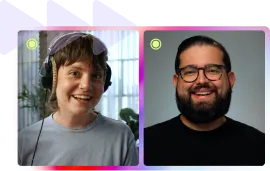
Riverside is an all-in-one video creation platform that’s easy to use for beginners and professionals alike.
You can capture up to 4K resolution with separate audio and video tracks for up to 10 participants. With local recording, everything records directly on your device, so your quality is unaffected by your internet connection. You can also record and edit on the go with our mobile app!
After recording, you can edit your video in minutes. It’s as easy as prompting the chat-based editor to “clean your audio”, “create a reel”, “add b-roll”, or even create a full edit. If you prefer to be more hands-on, try the timeline editor or text-based editor where trimming your videos is as easy as editing a document. End with audio enhancement, a custom background, or style your own AI captions.
If you’re recording long-form videos, you can instantly repurpose them into trendy short-form content with the clip maker. And don’t forget you can change the format and aspect ratio of your videos at the tap of a button!
Sign up for a free trial to start creating professional video content today.
Best for: Remote video recording, chat-based editing, and creating clips for social media
2. Buffer
Price: Free plan available. Paid plans start at $6/month.

Buffer automates social media posting by letting users schedule posts ahead of time. By batch-scheduling your social content calendar, you save yourself hours of time while posting consistently and building an engaged audience. Buffer also offers suggestions for peak posting times, and the new AI assistant generates post ideas and repurposes existing content with a click.
Best for: Automating scheduling and AI-generated posts
3. Canva
Price: Free plan available. Paid plan starts at $119/year for solo creators.
.webp)
Every social media content creator needs a reliable visual design tool to create and edit social posts. Canva is easy to use and has a large collection of templates for images and videos, along with ready-made elements, fonts, and stock photos. Users can even create images, GIFs, slideshows, and videos from prompts with Canva’s AI.
Best for: Beginner-friendly design suite for creating engaging and attractive social media graphics.
Best practices for engaging an audience on social media
Here are some extra tips you want to follow when creating top-quality content for social media:
- Hook your audiences immediately: Structure every piece of content to deliver value within the first three seconds to stop people from scrolling.
- Prioritize audio and video quality: Poor production will make people scroll away and sink retention fast.
- Don’t underestimate social media SEO: Optimize your captions, descriptions, on-screen text, and spoken audio with relevant keywords.
- Leverage short-form content: Repurpose long-form content into short clips to highlight the best moments and maximize reach with minimal effort.
- Don’t violate copyrights: Protect yourself from lawsuits by strictly using royalty-free or licensed music, images, and clips.
FAQs on social media content creators
How much do you pay a social media content creator?
Going rates vary widely based on experience and niche. You can expect to pay a social media content creator anywhere from $15 to $100+ per hour. Others charge on a per-project or commission basis.
What is a social media content creator vs. influencer?
Social media content creators work directly with brands to create marketing content for that business. They leverage their creativity when approaching a brand for partnership opportunities.
Influencers, on the other hand, are primarily concerned with building their own personal brands. They leverage their large audiences and powerful sway when partnering with brands to create sponsored posts.
How do social media creators make money?
Some social media creators work in-house with large brands, but most make money on a freelance basis through paid partnerships. They may also earn commissions or use affiliate marketing when working with brands.
Want to learn more about social media content creation? Check our video creation blogs.



%20(1).webp)

.webp)


.webp)
.webp)


